
Senate's RLDC ignites the “War on Mold,” in discussion with the Administration Division
A meeting requested by the Student Senate Residential Life and Dining Committee was hosted by the Administration Division at RPI on February 5, 2026. Chief Administrative Officer Mark Hampton, Director of Environmental and Site Services Leslie Nortan, Director of Environmental Health and Safety Jen Kazmierczack, Director of the Physical Plant Kevin Surman, Dean of Student Living and Learning John Lawler, and Director of Auxiliary Services Muhammad Ali were in conversation with members of the Residential Life and Dining Committee of Senate, Director of the Student Union Dr. Charlie Potts, and The Polytechnic. Chairperson of RLDC Shruthi Anandraman ’28 and her committee members started the “War on Mold” campaign the previous night, on February 4, at 6 pm, launching a survey to assess the extent of mold infiltrating residential areas on campus.
Within the first 18 hours, the survey received 36 responses, with all respondents reporting either mold or mice in their dorms. The “Student Senate Survey” had also yielded similar results thus far, with approximately 26 to 30 reports of mold among 92 responses, about half of which came from on-campus residents. Anandraman specifically expressed particular concern about freshmen experiencing these conditions as their first impression of campus life.
CAO Hampton acknowledged the severity of the issue while providing context about its prevalence beyond RPI. He explained that the eastern seaboard's higher humidity and rainfall, combined with buildings constructed on wet ground, create natural conduits for moisture. The issue with mold is, as he mentioned, that it is a problem before you see it and its effect, and an even more unmanageable problem when it is identified. Depending on seasonal change and fluctuating building usage patterns, it is extremely difficult to recognize the issue before it becomes too big. Director Kazmierczak outlined the administration's approach to mold prevention and remediation. The response process varies depending on the severity of the issue. Simple cases, such as high humidity in a bathroom due to a malfunctioning fan, can be addressed quickly and usually results in a cleaning procedure. More complex situations, such as steam leaks from underground infrastructure, require extensive intervention.
When FIXX requests are submitted, they are triaged by customer service representatives and routed to the appropriate department’s team: ESS for cleaning, Physical Plant for maintenance issues, or EHS for assessment. Director Surman estimated that 40 to 50 percent of mold reports turn out to be dirt, hair dye, or other substances, but urges students to always report potential mold regardless. For larger issues, RPI brings in New York State-certified mold assessors and professional remediators. Both the US Environmental Protection Agency and health departments recommend focusing on stopping the moisture source rather than testing, she noted. Testing is reserved for complex situations where a New York State assessor needs to determine the extent of contamination, possibly by cutting into walls.
Dean Lawler described the accommodation process for students with mold allergies or underlying health conditions. Students must submit requests through their portal, which are then reviewed by a committee. Health-related concerns go to the Health Center, while disability-related issues go to the Disability Services for Students Office. When the health center or disability office diagnoses a student and recommends immediate relocation, the housing department acts without requiring additional evidence. However, the formal process is necessary to prevent manipulation of housing assignments. SLL generally encourages students with sensitivities to purchase air purifiers. Lawler also emphasized the need for student education about preventing mold growth, recounting incidents where students unknowingly created ideal conditions for mold by closing bathrooms after showers or storing open food that attracted pests.
Hampton referenced the ongoing campus planning and facilities design process, noting that residence halls are a key focus area. He expressed hope for major renovations or even new residence halls, acknowledging that while new buildings will eventually develop mold problems, starting fresh with modern HVAC systems provides significant advantages over older buildings with decades of accumulated moisture issues.
The related issue of mice was also addressed. The Poly and RLDC members raised concerns about inadequate follow-up on pest control, particularly in buildings like Crockett Hall and the Quad dormitories where mice have been spotted in hallways and rooms. Norton explained that the campus has one pest control technician covering the 275 acres of campus area, making immediate follow-up challenging. The apparent understaffing of pest control technicians could be due to cited “limited budgets,” while Ali noted that the campus pest control contract ending this year, with a new “significant” one being negotiated specifically focusing on pest control and preventative measures in residential and dining areas on campus. However, no clarity was provided regarding the matter of technical staffing for pest control. Norton urged students to submit FIXX requests when they see full traps, noting that while her staff can retrieve them during the day or at night, they cannot reset traps. The choice between snap traps and sticky traps often comes down to student preference, as some students are disturbed by snap traps.
Beyond mold and mice, concerns were raised about basic maintenance issues that compound the housing grievances. To cite a specific example, Anandraman reported that E-Complex has experienced at least three weekends without toilet paper, forcing students to bring their own from their rooms. Norton acknowledged awareness of issues in E-Complex specifically, explaining that the department recently brought on a training lead "to teach some people who don't actually have the skills needed to maintain [RPI's] standards." The discussion also touched on snow removal issues at RHAPS near the East Campus Athletic Village, where stairs leading from residences are not being cleared, leaving students unable to safely access dining halls or classes during icy conditions, hoping to receive a quick resolution on the issue.
In order to improve transparency between the administration division and the student body, Ali suggested arranging meetings with residents of each dorm or block of dorms where custodial staff, repair personnel, and customer service representatives can introduce themselves. Anandraman also proposed monthly town halls where students could directly engage with facilities staff, with the student government potentially helping to facilitate and promote attendance.
On a lighter note, the meeting also touched on upcoming improvements to campus dining due to the contract renewal for residential and dining areas for Fall 2026 with the Sodexo Group. Ali outlined plans to bring local restaurants and vendors to various campus locations, including Alias Coffee on Fourth Street to the DCC, local eateries to the library and other retail spaces, and concepts of a high-quality bakery, Mediterranean cuisine, pizza, and Herbie’s vegan burgers from Fulton Street to the Student Union, to name a few.
A recurring theme throughout the meeting was the challenge of overcoming apparent student cynicism toward administrative processes. This lets problems go unreported, making it appear to administrators that fewer issues exist than students experience. As the "War on Mold" survey continues to collect data, both sides could acknowledge that while mold may never be completely eliminated from campus, a partnership between students and administration can minimize its impact and ensure safe, comfortable living conditions.
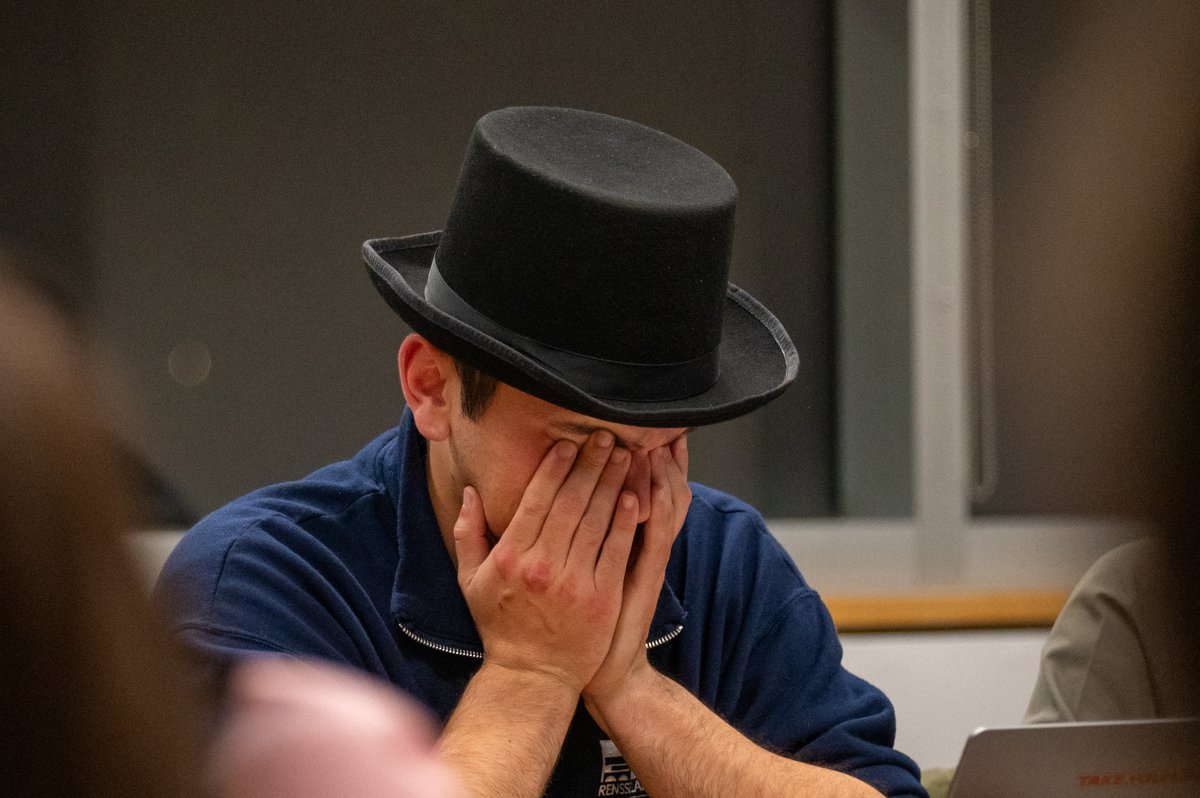 Student Senate
 Student Senate