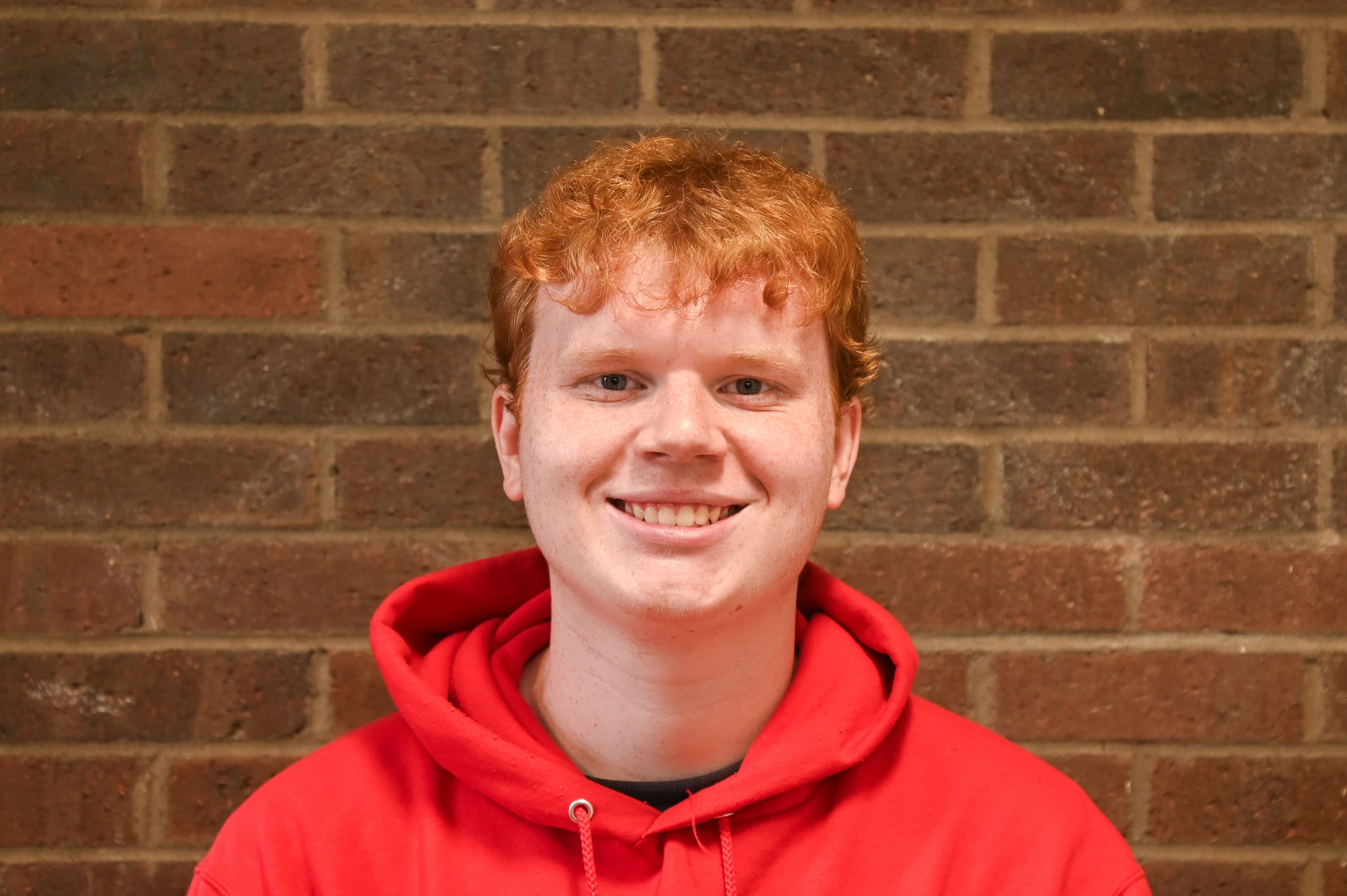
The Polytechnic recently sat down with Mark Hampton, RPI’s new Chief Administrative Officer, to discuss our physical campus, life at RPI, and the Campus Master Plan. Hampton, who was appointed to the CAO position in August 2025, has previously worked at six other higher education institutions, while spending the previous three and a half years at Amazon Web Services as a bridge between technology and higher education. Throughout our interview, Hampton repeatedly spoke on the Campus Master Plan, a holistic approach to shape the future of our campus, which will be revealed to the public in October of this year.
The CAO Role
The role of Chief Administrative Officer is a new position created by President Marty Schmidt ’81 this past year. It aims to combine different portfolios that support teaching and learning on campus. Hampton cites the old “siloed” approach, where individual groups are sections off, to the work of these distributed departments, including IT services, human resources, and campus planning. Despite having the same end goals, that being the betterment of campus and campus life, there was little communication between the work of these departments, and Hampton as CAO seeks to incorporate these departments together such that they can benefit each other and become a closer team.
Student Voices
Hampton spoke on the results of the Student Climate Survey that was sent out in 2025, and how those voices impact and inform his work. One major discovery from the survey was that RPI only utilizes about five out of every six square feet of space, leading to a surplus of 17%. Hampton wants to fully utilize the space we as an institution have available to us, while also lending all the space we have to flexibility. He cites the recent renovations to the first floor of the Union, and how, for example, the performance space can be used by a wide variety of clubs.
Study Spaces and Club Spaces
One of the largest topics coming from students is the lack of study spaces available to them, as well as spaces to host club meetings and unwind. Hampton compared his vision of these spaces as “a nice white box and a set of Legos” where students will be able “to build really cool things,” again lending to his ideas of flexibility with our spaces.
Campus Flow
Another topic he has heard from students is having a campus that is more conducive of running into people and gathering. Excluding 86’ Field and the Union, there aren’t many spaces for students to gather between classes. He compares his vision of RPI campus to the High Line in Manhattan, where “not only can [it] get you through places, but the journey itself is an experience.” Hampton also notes that it is those chance interactions in those spaces where clubs get formed and startups get talked about.
The Rensselaer Tech Park
The Rensselaer Technology Park is an RPI location just five miles south of the main campus that was created under the tenure of President George Lowe. Lowe saw it as a place where RPI innovation can drive regional economic growth, and where ideas from the classroom can be applied in a way that has impact. He also saw it as a place where RPI students and staff can have meaningful interactions with industry. Since the pandemic, Hampton sees that, despite past successes of the Tech Park, it has since become a glorified office park. He, as well as President Schmidt, want to see a future where its original vision is revitalized. Hampton is working with local economic development leaders on how to get investments for the infrastructure as well as looking at tenants for the park, with a particular focus on our core strengths: biotechnology, semiconductors, and advanced computing, including quantum computing. He also wants it to be a place where students want to go, which may be supported by possible shuttle services to the location.
Visibility
Visibility is a large concern in the Campus Master Planning process. Hampton quotes a student who said “marketing materials say you are welcome [at RPI] but the campus says you're not.” He cited the sheer amount of interesting things happening on campus that does not receive attention due to poor signage and storytelling. Hampton also speaks on the culture of visibility, and how “we're not encouraged to ask questions” with what is happening on campus. He hopes to create a more open campus environment with greater communication.
The Playhouse and EMPAC
Hampton has heard loud and clear from the student body the need for The Players, as well as similar performing arts groups like the Orchestra, to have a space on campus. While they have searched for a place on campus to accommodate them, they have yet to find a suitable venue. Hampton also spoke on the sheer cost of renovating the Playhouse, a project he believes is only getting harder and further out of reach. When asked about using EMPAC as a venue for these clubs, Hampton noted that the regular programming of EMPAC would displace student clubs, and that he hopes for a space which they have full control over without having to worry about external schedules.
Dining Halls and Food Services
One of Hampton’s first weeks here at RPI saw the outrage from the student body of the discontinuation of having burgers offered at dining halls daily. He takes that experience to inform him on how important these dining services are to students here. Current plans involve working with Sodexo to improve where these dining services are located as well as what retail vendors are in these locations. One benefit of these kinds of improvements is their speed. Hampton states that while an academic building may take decades to build, a dormitory can take years to renovate, dining options can be improved in mere months, so he hopes to deliver those quicker improvements to the student body.
Dormitory/Off-Campus Housing Plans
Hampton mentions two distinct approaches towards ensuring that students get the housing they need. Firstly, as many other universities do, RPI may, in the future, work with outside providers of housing to build and maintain spaces close to campus, while administration provides RA and LA support, security, and programming. Secondly, RPI owns a decent amount of buildings off campus, mainly on People’s and 8th Street. Hampton says they are working with Foundation Assets to renovate these spaces and make them available for off-campus housing.
Role of Campus During the Summer
With the recent changes to the Summer Arch no longer being required, the question of what will happen on campus during that time has come up. Hampton mentioned that RPI campus could look into hosting summer conferences as a great way to utilize the spaces and outreach to potential students over the summer. He also speaks on the benefit of maintenance time. In a post-required-Arch world, where the summer semester is much smaller or gone entirely, an emptier campus lends itself to large-scale maintenance projects that would normally disturb student life during the academic year.
Childcare center
RPI is working with Bright Horizons to explore the possibility of a childcare center on campus. RPI would build it, but Bright Horizons would design and manage the construction. They are currently scouting out locations, and Hampton mentioned that more progress has been made in the past few months than in the past few years.
JEC Bridge
The JEC Bridge renovations were originally to address surface-level issues, though deeper-rooted problems were discovered and needed fixing as the project went on. It is close to being finished, though the Winter weather has delayed work a lot. Hampton sees renovations finishing by the time the weather warms up in the Spring. Hampton also notes that that bridge has a twin, the walkway between DCC and JEC, which will also need to be addressed. Renovations on that are planned to start right after graduation, and administration hopes that those get finished while the majority of the student body is away for the summer.
Heating
Most of the heating on campus is steam-power, which can be wasteful and hard to adapt to the changing temperatures we saw this Winter. Hampton wants to focus on the big picture, long term approach, where RPI changes the way it looks at heating all together, whether through a different heating source or other innovations, while still considering short term issues that pop up.
IT
There is a lot going on with IT, especially as RPI got a new Chief Information Officer just a month ago. Modernizing systems, using AI, and other innovations sit at the forefront of RPI’s IT plans. They are currently working on a student advising platform with AI capabilities that smooth out the student-experience with scheduling meetings and speaking with advisors.
Athletics
There is currently a project to renovate the Houston Field House’s hockey arena starting next month. Recognizing student athletes as a key subgroup of students is important to the future of campus, while also making sure they are connected through routes between main campus and the athletic facilities.
Future Goals
Hampton spoke on a few goals he has for the near future:
- The on-campus dining experience should be something faculty and staff are excited about.
- If not done, at least in the works, four or five spaces for students that are not currently available.
- IT modernized and a more seamless student experience for scheduling meetings and accessing academic records.
- Students, or at least those that really care, to have a sense of what RPI could be in 20 years and to be a part of that change.