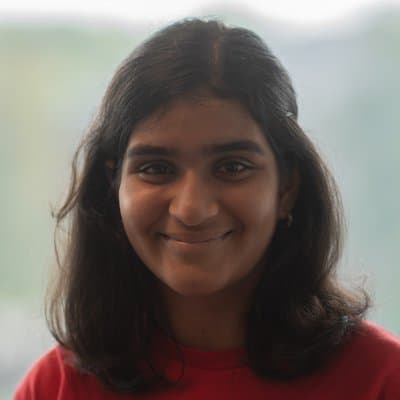
The following is a transcript of our December 8, 2025 interview with Dr. Jennifer Freedberg. The transcript has been edited for clarity.
The Poly: So, you were an undergrad here until 2018?
Dr. Freedberg: Yes, 2014 to 2018.
What was your major coming in, was it the same major as when you went out?
Yeah, it was physics the whole way. I had a really great physics teacher in 10th grade and she was awesome, and I liked learning how the world worked and I liked the questions that physics was asking and so, I was like “well, I should do physics!” Actually I was really I was fortunate, I lived like ten minutes–five minutes away from the National Institute of Standards and Technology in Maryland and so, I actually worked there in high school and I learned what is research and I learned from there very quickly, I'm an experimentalist: I need to be like doing something with my hands, yeah, I like building things. And so, yeah, experiment is a good fit for me.
So cast your mind all the way back, what made you take physics and not engineering coming to an engineering school?
My mom really wanted me to be an engineer because it makes more money. But I just thought that the questions—this is how I put it now and I don't think I could have articulated it then—but like I liked the type of questions that physics was asking compared to other disciplines of science and compared to engineering and I like the way that physics attacks problems, which is you know, very simply, first principles. I forget if I said this during my talk so, Boris Shklovskii at Minnesota. He's great, he would say, “slice [the problem] very thin.” Which is yeah, like it's a really good picture in your head. Physics is about having a good picture of what's reality and then knowing when that picture applies and when it doesn't apply.
Yeah, and seeing how all of it connects instead of looking at each phenomenon in a silo.
Yeah, and I think that that's like one of the things I like about condensed matter a lot is that we're looking at how things behave cooperatively. That's like most of what the field is doing and whatever facet of condensed matter you're looking at that's really the type of questions that you're trying to answer and it's very fun. Yeah, and it's hard. So it keeps you on your toes.
What made you choose RPI specifically?
Actually, I remember in high school, I was—obviously I'm a giant nerd, I can't, I can't hide from this fact. I would go around and I would—especially once I started getting interested in physics and taking more advanced classes—like I would just be interested in like thinking about it more often than my peers and I would try and tell like a nerdy joke, which I now realise is kind of, it's like a dad nerdy joke, but like people would be like, "why are you talking about school when it's not school?" Yeah, and I don't know; it's just one of the reasons I like academia is because everybody likes what they do and I want to like what I do. And so anyway, I came to RPI and like I basically had some test jokes that I would tell people and I would—If people laughed then I would or at least were appreciative that I was trying, then it would be like, “okay, this is good.” RPI was really the only place that did that and it was really between like RPI and University of Maryland; which is, I grew up in Maryland and I knew that there was like a ton of people from like that I went to kindergarten with that were going to Maryland and I knew what my peers were saying about, you know not wanting to do like work outside of work and I was just like, “You know, I want to–I like thinking about this stuff,” and RPI was extremely nerdy and I felt like I was at home, and it was great.
You want to be in that space kind-of way?
Yeah, and it's like it was really refreshing, and two more anecdotes! [Prof. Peter] Persans actually, when I was visiting, I mean, I definitely looked like a lost high schooler so he could immediately identify me. He was like, “oh, let me show you my Physics II class.” And he just took me to some group of students and they showed me around for the whole day. It was—okay I'm sure he knew that they would be the most likely to show me around for the whole day. But like that was just like the first kind of example that I saw of people that were dropping everything and actually, you know, trying and wanting to help and that's very RPI. I miss that, and also looking at the posters on campus. They're so nerdy. It's amazing. I love them; it's wonderful.
[My parents] came here and I think there was an orientation with Prof. Gwo Ching Wang, and it was all like prospective physics majors and it wasn't even people who were here yet, but just the kind of people who were attracted by the school were literally who my parents saw me as right? Yeah, it was the nerds who just don't stop thinking, who don't stop asking questions… it's that kind of curiosity. I think you actually nailed it. I didn't think of it that way before so thank you.
And then, I'm assuming that you got your interest in condensed matter physics from RPI.
Yeah, actually it was kind of two things at once. So I was actually working in [Prof. Ethan Brown]'s group; so he was my undergrad advisor. And I was helping basically figure out like, how should we build detectors? Like what makes—
For nEXO?
Yeah, for nEXO. It's like what, you know, “how should we do this? How should we design this?” And I was having a lot of fun. Then I also took Persans’ quantum physics class which maybe is called something different now—it was basically that's where I got my first introduction to solid-state physics.
Applications [of Quantum Physics]?
Okay, yeah, that would make sense. And so we learned about band structures. I was like “this is really cool” and I ended up really liking it; and it helped me understand more of the detector stuff that I was doing and I was like “wait, I like this stuff.” I like tabletop experiments like “maybe I actually am more inclined to liking condensed matter instead of particle physics.” And then actually my first group at NIST was in quantum optics, which was also really cool. I mean, I've gone back to working with lasers. So then, at the end, it just turns out to be a question of like what types of problems do you like? So then in grad school, I really ended up liking—I did an REU and I liked the problem I was working on but like, really when I got to learn about it in grad school, I really like condensed matter.
You went from like particle to—
To optics to particle to condensed matter to still condensed matter but using spectroscopy, optical spectroscopy.
And so what was like the research project that made you—I mean—what was the question that made you want to go into condensed matter physics?
So the thing that made me think I was interested was the classes and then also building the detectors. I like having my own experiment that I can build but I really started to like when I was studying spin glass, which I didn't talk much about but what's really cool about the system is its energy landscape. So, you know how like there's the bumpy energy landscape at the end [of her research presentation]? Spin glass is kind of like that. And the energy landscape is like basically fractal so it looks the same no matter how much you zoom in on it. Okay, and so what that means about thermal activation—so like like hopping over barriers exactly the same thing I was talking about in my talk, is that this happens basically no matter what at like the same rate and so that gives rise to some really weird very long time dynamics so like I can watch my system relax… So that's basically that's you know, that's what kept me going during my PhD was like there's some really cool mysteries I feel like that I got to work on.
I actually would like to keep talking about that but shifting back to the RPI side of it: what is something that you took with you from RPI? Like a specific way to look at problems that you learned over here? Or is there something else that you took?
The answer is yes. So I think that I learned a lot about about like teaching and about mentoring and also about the things that give me fulfillment. So like teaching, mentoring is important to me not just because—they really changed my life. But it also makes me feel like I can give something back and I think that's important. Yeah, but also community is such an important aspect of RPI here. Frankly, when I was here you wouldn't survive like RPI–maybe phrasing it more gently, RPI is hard, right? And it sounds, from hearing all the mentor speeches [at the I-Persist Banquet], it's still very hard and if there wasn't such a positive community, it would be a lot harder. But the fact that RPI students like in general support each other, that's something that's really unique and you can't really teach that in other places. Like in other places I've been, the sense of community isn't as strong and it's just really nice that there's such like—it's just really cohesive. I can talk to somebody from RPI either someone who's here right now or someone who graduated from RPI and like just click, you know? It's like we all went through something that was difficult but we persevered and like that's not for nothing. That's hard, but I don't know, we're all doing it together: you can't do things alone, you need other people. Yeah, RPI is a– I don't know just being back here; it's really making me feel like this way again, like we tried to build community to the other places that we've been but like at RPI it's like already here.
Do you think that it's just the kind of people that come here who just have that kind of empathy or is it the fact that RPI? It's a weird analogy, but it's kind of like a pressure cooker.
Yeah, but there are other universities that are very difficult as well but instead of working together people just kind of fracture and are very independent. Yeah, and like then the people are miserable where it's like. Here, it's kind of like we're all you know going through the same thing but we're all going through it together and that—I mean that creates bonds across generations. I think that—I mean, what I study now: collective excitations are like, basically, single particles behave differently than particles in groups, and in a way it's almost like peer pressure, right? Like that's actually how I explain collective excitations to people in my family when they ask what I do: “yeah, I study peer pressure!” But like in this case, it's a positive peer pressure. You see you see everybody caring about everyone else's well-being and it makes you care, too.. So it's like even if people were inclined to be caring, they still might not if nobody else is. But since everyone here already is, then it brings out the best in people. RPI was very hard, you know. Obviously whoever's reading this is going through it now. So it's like—I'm not gonna sugarcoat it—but I feel like it also showed me that I had a lot more strength than I knew that I had coming in and I think that that is really valuable.