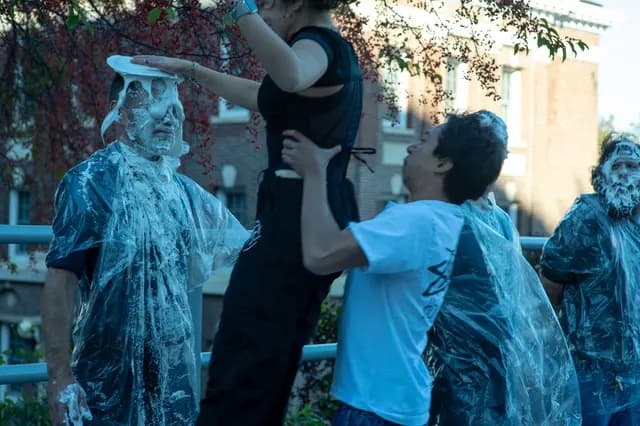
With the tradition-rich Grand Marshal Week approaching, it’s fitting to take a look and see where it all began. In its earliest form, elections were termed GM Night. In the late 1800s, the election of the GM was carried out by a caucus of students in a back room of Harmony Hall, a hangout on the corner of Third and River streets. Locking a large number of college-age males away from faculty supervision led to certain “hijinks,” as Samuel Rezneck, professor emeritus of history, termed their behavior in his 1968 history of the Institute. Doubt is easily cast on the legitimacy or democratic nature of these proceedings. Stories of excessive violence and alcohol consumption leaked to the administration, who pressured for major reforms. Eventually, students exercised some amount of restraint. In the 1880s, Greek Society got involved. The support of the fraternities polarized the elections. Partisan politics erupted across campus. The differences between these student body sections were trumpeted each election night. Student organizations and independent fraternities acted as voting blocs, combining their numbers to support their favored candidate. It was a wonderfully corrupt political system. The greek students brought with them their unique energy. No matter the results, students paraded through Troy. This lively mob visited faculty in their homes with serenades and speeches. The faculty members joined in the fun. The small size of the sub-200 student body allowed for a closeness and energy level not felt since. Such fun was had these nights that students began to celebrate for longer periods of time. Students would spend days at picnics thrown in the campus green space. Bands were called to play. Students flocked to these live performances, enjoying the spring weather and the finest 30-cent beer money could buy. Some traditions were replaced by other, newer ideas. And so the week grew, and the beer flowed. Compared to the celebrations of the last two decades, these extended revelries bear the closest resemblance. The major difference, and one many students mention, is the lack of the keg lines. Beer was plentiful and cheap back then, and in the years following Prohibition, the drinking age was set to 18. When 1984 rolled around, the passing of the National Minimum Drinking Age Act elevated that age to the familiar 21. The Institute enforced this law, and the beer disappeared. The GM Week mug is the one lasting memento of that bygone era.