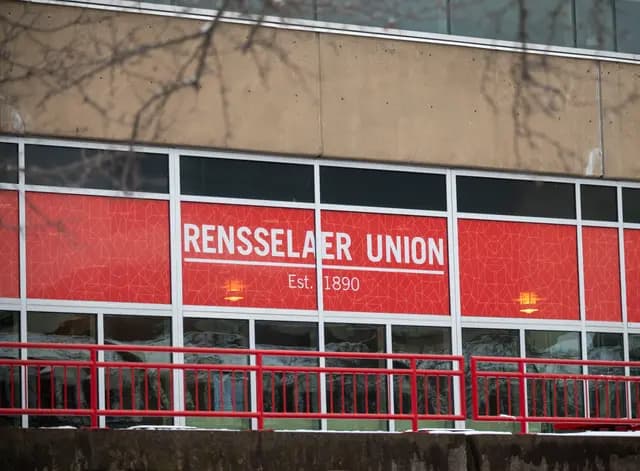
A meeting today may mark the beginning of the end of the extended drama surrounding the issues of faculty governance at RPI. A general faculty meeting will be held today to discuss and vote on whether to conduct a referendum that would amend the constitution of the Faculty Senate.
The proposed modifications have been developed by a committee on faculty governance jointly chaired by Provost Robert Palazzo and Professor of Art Larry Kagan, the president of the Senate before its suspension last fall. The changes are primarily designed to bring the constitution in line with the directives of the Institute Board of Trustees so the Senate can be reinstated as a legislative and advisory body recognized by the Rensselaer administration.
Specifically, the amendments would restrict the voting membership of the Senate to tenured and tenure-track professors (as per the Board’s December 2006 resolution) while ensuring that librarians, professors emeriti, and contingent faculty—including clinical and research professors—would still be represented as non-voting members.
Preliminary drafts of the amendments did not elaborate on details about how non-voting members would function. Kagan stressed verbally that aside from formal votes to be reported to the Board of Trustees, they “would be full members.” For informal discussion, however, there would still be “straw polling of all the senators.” The changes would also address a Board directive from last month that bars faculty members from participating in governance in the event of a conflict of interest.
The faculty will also consider a second set of amendments, also developed by the Palazzo-Kagan committee, that would overhaul several of the operational aspects of the Senate. Highlights of those modifications include a restructuring of the Senate’s Executive Committee and a reduction of some of the prerequisites for certain Senate actions.
According to Kagan, the two sets of amendments will be considered separately so that the first group stands a better chance of passing, even if the faculty decline the procedural changes. In this way, he hopes to ensure that the revised constitution will meet the standards of the Board of Trustees as soon as possible, paving the way to the eventual reinstatement of the Senate.
A draft of the amendments was presented to the faculty March 19 in a closed meeting of tenured and tenure-track faculty. Jacob Fish, the Rosalind and John Redfern Professor of Engineering and chair of the provost-appointed Faculty Governance Review Committee, also reported on the progress of his panel.
The Fish committee conducted a survey of five research universities that were similar to RPI in structure and had certain desirable attributes. Each school was looked at for structure and effect of their respective governance systems.
The Fish committee did not put forth a solid recommendation, however. “The real plane for the results of the Fish committee is to provide input,” Kagan said, noting that governance review should be an ongoing process, and will not end with the work of either committee.
While the Fish committee’s results provide a useful baseline for reforming the governance structure at RPI, Kagan noted some potential issues with the report. He said that there may have been some problems with the committee’s methodology, since the institutions sampled were chosen because of their status as Rensselaer’s peers, rather than for their histories of successful faculty governance.