TAP wins award
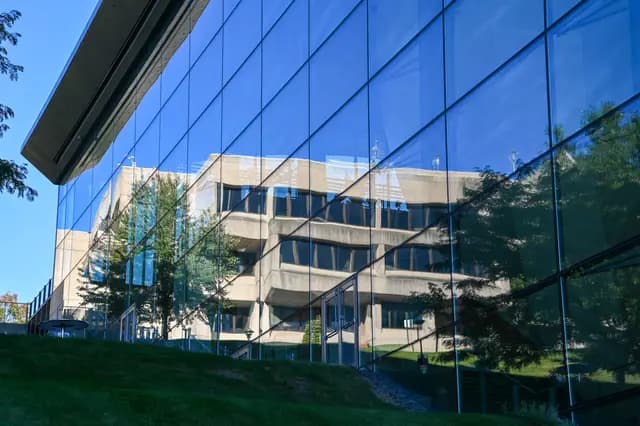
The Empire Award has been given to the Troy Architectural Program for working with Rensselaer on its Neighborhood Renewal Initiatives.
The program was established last year to improve the livability of Troy’s neighborhoods, promote economic development, and stabilize property values. Among the initiatives of the program is the Homebuyer Incentive Program, which offers $5,000 to members of the Rensselaer community who buy homes in certain Troy neighborhoods.
The TAP was founded in 1969 by RPI students and faculty as a non profit corporation.
NSF award to Carothers
Christopher Carothers, assistant professor of computer science, received a Faculty Early Career Development Award from the National Science Foundation (NSF). He will use the five year $375,000 grant to study reverse computation in the simulation and modeling of large-scale networks.
Carothers’s research aims to develop more effective Internet traffic management and congestion control.
Director Named
Professor William Pearlman has been named director of the Center for Image Processing Research. Pearlman, a professor of electrical, computer, and systems engineering, will lead the center in conducting research on the various aspects of image processing.
CIPR was formed in 1978 as part of the Electrical, Computer, and Systems Engineering Department’s Image Processing Laboratory. It houses researches in image processing related to telecommunications and telephony, optical information processing, medicine and biology, computer graphics and vision, and material science engineering.
MBA salaries up
According to a recent report by the Lally School of Management and Technology, average starting salaries for Rensselaer MBA graduates have increased by $4,000.
In 2001, an average starting salary of $70,588 was pulled down, with more than half the students receiving an average bonus offer of about $10,000. The previous average was $66,229 with a $9,000 bonus for the year 2000.
The report also listed the companies that hired most of the graduates as consulting companies such as Accenture and Cap Gemini Ernest & Young. Moreover, the majority of the graduates went to work for companies in the Northeast.
Lighting & Snowplows
Researchers at the Rensselaer Lighting Research Center believe that changing the lighting system on the back of snowplow trucks could reduce the number of rear-end collisions between the trucks and other vehicles. According to surveys conducted in the snow-belt states of Iowa and Minnesota, 70 percent of snowplow truck accidents involve rear-end collisions.
Instead of the flashing lights that are currently used on the rear of most snowplows, the LRC developed a steady-burning light bar using light-emitting diodes (LEDs). Moreover, the New York State Department of Transportation has worked with the LRC to test the lighting systems. The results showed that the narrow, steady-burning lights are more noticable than flashing lights when visibility is diminished by poor weather.