Grand Marshal Gil Valadez announced at last week’s Student Senate meeting a campaign to query students about their opinions of the Senate and RPI. Referred to as "20 Days and 20 Nights of Student Feedback," this project will take place between October 30 and November 19. Valadez and student senators will attend club meetings and visit dorms and other student housing to ask students about issues that are important to them. The campaign will also include the unveiling of the recently updated Student Senate website. "We are trying to actively pursue student feedback," said Valadez.
The Senate also had a brief discussion about parking problems at Rensselaer. Although no solutions to parking problems were proposed at the meeting, it was pointed out that Rensselaer plans to launch a shuttle bus this spring for transportation from campus to some underused, remote parking lots, such as the Houston Field House lot. The shuttle could alleviate some of the stress on main campus parking lots.
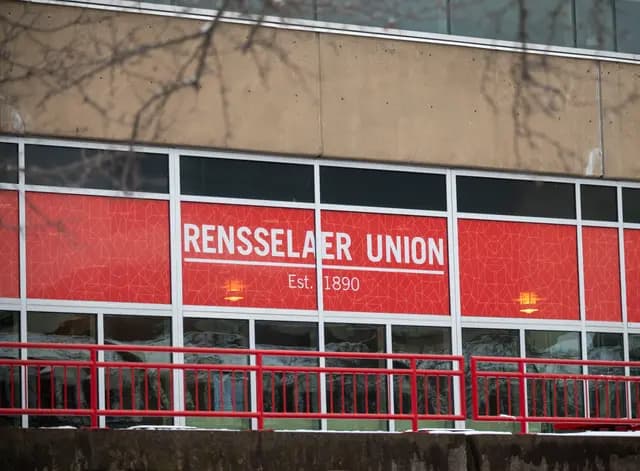
At the meeting, Class of ’02 Senator David Siebecker and IC Senator Sarah McMordie, noting student input, proposed the placement of public computer terminals in the Rensselaer Union.
Currently, there are no public computer terminals in the Union, and students who do not own laptops are unable to do computer tasks such as checking their e-mail.
The Senate referred the proposal to the Rensselaer Union Executive Board, with further input from the Computing Committee.
The Senate Computing Committee, chaired by Siebecker, is currently reviewing RPI’s laptop policy.
Recently, the committee met with Sharon Roy, director of Academic and Research Computing, to review ideas and concerns about the laptop program. They discussed a suggestion to deliver laptops with customized software packages for each major. Laptops are currently packaged with every program required for all majors at Rensselaer. The suggestion to customize the software was determined to be infeasible because of the manner in which software is installed on the laptops—IBM and RPI jointly produce the software packages over the summer, and not enough time is available to customize the laptops.
Roy and the Computing Committee also examined the possibility of students receiving the software on CD-ROM so that they can reinstall software if necessary. Because licensing agreements with Microsoft currently prevent each student from receiving CDs with the necessary programs, if a student needs to reinstall software he must borrow a CD from the VCC Help Desk.
Another software issue considered was the problem that some campus software programs require students to log in to RPI’s network in order to work properly. This creates a situation where off-campus students cannot easily access these programs. The committee learned from its discussion with Roy that this issue will be addressed in the next six months.
In addition, the Computing Committee and the Academic Affairs Committee are creating a survey regarding the effectiveness of laptops. A recent survey conducted by the Anderson Center for Innovation in Undergraduate Education reported that 78 percent of students felt that laptops had significantly enhanced their learning. The Computing Committee’s survey is being developed to gather more detailed information on the mobile computing program.
After the committee has analyzed the surveys, it plans to release the results to students and administrators and propose recommendations on how to improve the laptop program.
Next semester, the committee plans to review the electronic citizenship document. The Campus Computing Committee meets on Mondays at 8 pm in the Student Government Suite on the third floor of the Rensselaer Union.