|
News

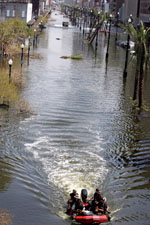
Student groups plan fundraising events in aftermath finding activities
Ed/Op
Staff Editorial
Join in the Katrina relief efforts with RPI Editorial Notebook
Share medical condition info Editorial Notebook
Open your arms to new students Derby
PU shares remarks Top Hat
Form a team, Go Be Red! Letter to the Editor
Parents need to back off
Features
Can’t find a club you want to join? Start one! Counting Crows provides most quotable song lyrics Dave Barry
Low gas prices are a constitutional right Words to Eat By
Troy’s Albaraki offers up delicious Lebanese cuisine
Sports
Red Hawks sweep opening weekend Field hockey triumphs in second extra session Preseason All-American demands perfection X-Country ready for season
|
|
Rensselaer in Brief
Gas tax changes sought
With the price of gas fluctuating well above the $3 mark, government officials across New York State, as well as in Troy, have sought relief in the form of a suspension of the state sales tax on gas for lower and fixed income residents who may be most impacted.
On Thursday, the Troy City Council unanimously passed a resolution asking the state legislature to suspend the four percent sales tax on gasoline. Aside from the four percent local tax there are federal and state excise taxes. Altogether, taxes constitute 31 percent of the price of gas, distribution and marketing cost 13 percent, refining costs 13 percent, and crude oil is about 43 percent.
Lighting the highways
RPI’s Lighting Research Center has received an $800,000 grant from the federal government to investigate the creation of guidelines that pertain not only to the re-lighting of highways in general, but also the issues of safety, cost, and light pollution in particular.
During the 1970s, the U.S. Department of Transportation installed lighting on highways across the nation, but left the expense of powering the lights to each particular locality. As a result, many communities opted to leave the lights off due to energy problems at the time and current budget constraints.
The RPI project will emerge with guidelines that will help local planners and officials across the nation weigh the costs and benefits of deploying new street lighting or retrofitting existing lighting structures. E-Mail for Life changes
Over the summer, RPI alumni with an E-mail for Life account received a message informing them that due to ISP blacklisting of Mail2World servers, e-mail deemed to be spam forwarded using the E-mail for Life service would only be forwarded if the message was determined not to be spam or if the sender was on a safe list of authorized senders.
Initially, the flagging of spam had disrupted the forwarding of legitimate e-mails. Users needed to either change their filtering settings or add users and domains they wanted to receive e-mail from to their safe senders list. Both paying and forwarding-only E-Mail for Life users have a web interface to manage spam and safe senders, but only paying users can send e-mail using the web interface.
|
|